
Blog
How Embroidery Digitizing Affects Stitch Quality, Production Speed, and Costs

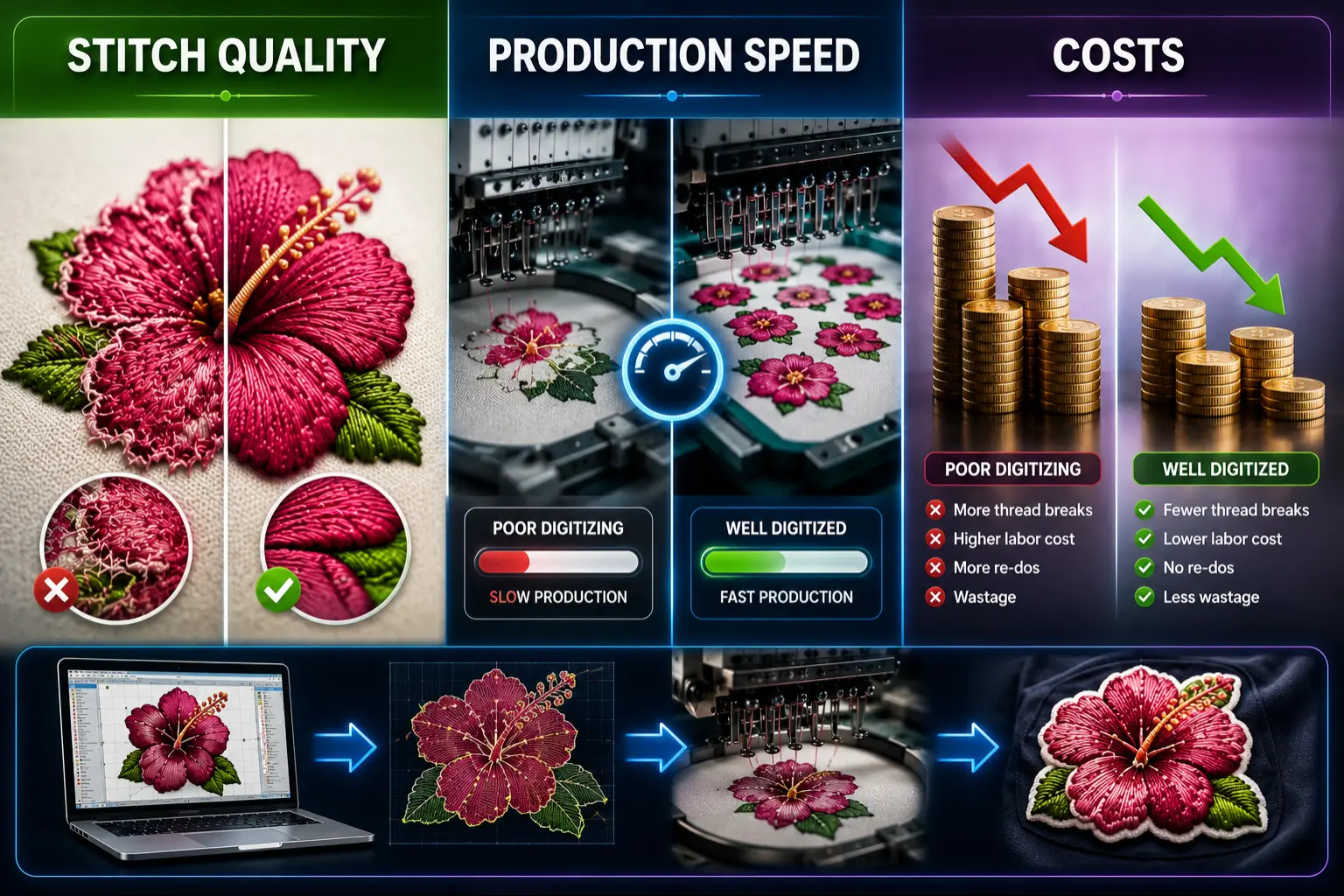
In the embroidery industry, many people focus on embroidery machines, thread brands, stabilizers, and garment quality when trying to improve their final product. While all of these factors are important, one critical element often has a greater impact on the success of an embroidery project than anything else: embroidery digitizing.
A well-digitized design can produce clean stitches, faster machine run times, fewer thread breaks, lower production costs, and consistent results across multiple garments. On the other hand, poor digitizing can lead to distorted logos, excessive stitch counts, production delays, wasted materials, and unhappy customers.
Whether you’re an embroidery business owner, apparel decorator, promotional products supplier, or brand manager ordering embroidered merchandise, understanding the relationship between digitizing, stitch quality, production speed, and costs can help you make better decisions and achieve better results.
In this comprehensive guide, we’ll break down exactly how embroidery digitizing influences every stage of the embroidery process and why investing in professional digitizing can save time, money, and frustration in the long run.
What Is Embroidery Digitizing?
Embroidery digitizing is the process of converting artwork, logos, or designs into a stitch file that embroidery machines can read and execute.
Contrary to popular belief, digitizing is not simply converting an image into stitches with software.
Professional digitizing involves manually creating instructions that tell the embroidery machine:
- Which stitch types to use
- Stitch direction
- Stitch density
- Underlay structure
- Compensation settings
- Start and stop points
- Thread trims
- Layer sequencing
- Fabric-specific adjustments
Every stitch placed in a design serves a purpose.
The quality of these instructions directly affects how efficiently the embroidery machine performs and how the final embroidery appears.
Why Digitizing Is the Foundation of Successful Embroidery
Think of digitizing as the blueprint of a building.
A skilled construction team cannot build a quality structure using a flawed blueprint.
Similarly, even the most advanced embroidery machine cannot produce excellent embroidery from a poorly digitized file.
Every embroidery outcome depends on the digitizing process.
It determines:
- How the logo looks
- How long it takes to embroider
- How much thread is used
- How often machines stop
- How many garments are rejected
- How profitable a job becomes
This makes digitizing one of the most important factors in commercial embroidery production.
How Embroidery Digitizing Affects Stitch Quality
1. Stitch Direction Controls Visual Appearance
One of the first things professional digitizers consider is stitch direction.
Stitch direction affects:
- Texture
- Light reflection
- Shape definition
- Visual depth
Proper stitch angles create a polished and dimensional appearance.
Poor stitch direction can cause:
- Flat-looking embroidery
- Distorted shapes
- Uneven texture
- Visual confusion
Experienced digitizers use stitch angles strategically to highlight design elements and improve readability.
2. Proper Density Creates Cleaner Embroidery
Stitch density refers to the spacing between stitches.
This is one of the most important quality factors in embroidery.
Excessive Density Problems
When too many stitches are packed into a design:
- Fabric puckers
- Thread breaks increase
- Needles break more often
- Embroidery becomes stiff
- Shapes lose definition
Low Density Problems
When density is too low:
- Fabric shows through
- Coverage becomes uneven
- Logos appear incomplete
- Durability decreases
Professional digitizers balance density carefully to achieve maximum visual quality without creating unnecessary bulk.
3. Underlay Determines Stability
Underlay stitches form the foundation beneath visible embroidery.
Many embroidery problems stem from poor underlay.
Quality underlay helps:
- Stabilize fabric
- Improve edge definition
- Prevent sinking
- Support top stitches
- Increase durability
Without proper underlay, even expensive embroidery machines struggle to produce clean results.
4. Pull Compensation Maintains Shape Accuracy
Embroidery stitches naturally pull fabric inward.
Without compensation, designs become distorted.
Common issues include:
- Circles becoming oval-shaped
- Borders shrinking
- Text becoming narrow
- Thin lines disappearing
Professional digitizers use pull compensation to maintain the original proportions of a logo after stitching.
5. Small Text Readability Depends on Digitizing
Many business logos contain:
- Company names
- Slogans
- Taglines
- Website addresses
Poor digitizing often causes small text to become unreadable.
Professional digitizers modify lettering specifically for embroidery by adjusting:
- Character spacing
- Stitch types
- Density
- Column width
This ensures text remains clear and legible even at smaller sizes.
How Embroidery Digitizing Affects Production Speed
Many embroidery businesses focus solely on machine speed.
However, machine speed means little if the digitized file is inefficient.
A machine running at 1,000 stitches per minute is only productive if the design itself is optimized.
1. Efficient Stitch Counts Reduce Run Time
One of the biggest misconceptions in embroidery is that more stitches equal higher quality.
In reality, excessive stitch counts increase production time without necessarily improving appearance.
For example:
A poorly digitized logo may contain:
- 25,000 stitches
A professionally digitized version of the same logo may contain:
- 18,000 stitches
Both designs may look identical.
However, the optimized version finishes significantly faster.
When producing hundreds or thousands of garments, these time savings become substantial.
2. Better Pathing Improves Machine Efficiency
Pathing refers to the sequence in which a machine stitches a design.
Professional digitizers optimize pathing to reduce:
- Unnecessary movement
- Thread trims
- Jump stitches
- Machine travel
Efficient pathing allows machines to spend more time stitching and less time moving.
The result is:
- Faster production
- Cleaner embroidery
- Reduced machine wear
3. Fewer Thread Breaks Increase Productivity
Thread breaks are among the most expensive production interruptions.
Common causes include:
- Excessive density
- Poor stitch sequencing
- Long satin stitches
- Improper compensation
Each thread break forces operators to stop production and restart the machine.
Professional digitizing minimizes these issues, leading to smoother and more efficient production runs.
4. Reduced Machine Downtime
Poor digitizing often creates machine stress.
This can result in:
- Needle breaks
- Thread nests
- Registration problems
- Production interruptions
Professional files help machines run consistently with fewer stoppages, increasing overall productivity.
How Embroidery Digitizing Affects Production Costs
Every embroidery business measures profitability.
Digitizing plays a major role in determining how much a job costs to produce.
1. Lower Stitch Counts Reduce Labor Costs
Machine time is money.
Every additional minute spent embroidering increases labor expenses.
Efficient digitizing reduces run times, allowing businesses to complete more orders in less time.
This improves profitability without sacrificing quality.
2. Reduced Thread Consumption
Excessive stitch counts use more thread than necessary.
Over hundreds or thousands of garments, wasted thread becomes a significant expense.
Optimized digitizing minimizes thread usage while maintaining excellent coverage.
3. Lower Risk of Garment Damage
Poor digitizing often causes:
- Fabric puckering
- Distortion
- Misalignment
- Thread breaks
These issues can ruin garments and increase production costs.
Professional digitizing reduces the likelihood of expensive mistakes.
4. Fewer Production Errors
Every rejected garment costs money.
A poorly digitized logo may require:
- Re-runs
- Replacements
- Additional labor
- Customer compensation
Quality digitizing reduces error rates and improves consistency.
5. Longer Machine Life
Embroidery machines represent major investments.
Excessively dense or poorly structured designs place additional stress on:
- Needles
- Hooks
- Tension systems
- Motors
Efficient digitizing reduces wear and tear, helping equipment last longer.
Real-World Example: The Hidden Cost of Poor Digitizing
Imagine an embroidery shop receives an order for 500 polo shirts.
Poorly Digitized Logo
- 25,000 stitches
- Frequent thread breaks
- Multiple trims
- Longer machine run times
Professionally Digitized Logo
- 18,000 stitches
- Efficient pathing
- Minimal trims
- Smooth production
The difference may seem small on a single garment.
Across 500 garments, however, the shop could save:
- Hours of machine time
- Significant thread usage
- Labor expenses
- Equipment wear
This is why professional digitizing often pays for itself many times over.
Why Cheap Digitizing Can Become Expensive
Many businesses choose low-cost digitizing services to save money.
Unfortunately, cheap digitizing often creates hidden costs such as:
- Production delays
- Garment waste
- Re-digitizing fees
- Customer complaints
- Lower embroidery quality
- Lost business opportunities
The initial savings quickly disappear when production problems arise.
The Competitive Advantage of Professional Digitizing
Professional digitizing provides benefits that extend beyond individual embroidery projects.
Businesses gain:
Consistent Quality
Every logo looks the same across different garments and production runs.
Faster Turnaround Times
Optimized files increase production efficiency.
Better Customer Satisfaction
Clean embroidery creates stronger impressions.
Increased Profitability
Reduced waste improves margins.
Stronger Brand Presentation
Professional embroidery reflects professionalism and attention to detail.
Signs of a High-Quality Digitized File
A professionally digitized embroidery file typically includes:
- Clean stitch flow
- Balanced density
- Minimal jump stitches
- Efficient pathing
- Proper underlay
- Accurate compensation
- Readable text
- Smooth satin columns
- Fabric-specific optimization
These characteristics contribute to superior embroidery performance.
Choosing the Right Embroidery Digitizing Partner
Not all digitizing services provide the same level of expertise.
When selecting a digitizing company, look for:
Manual Digitizing Expertise
Avoid providers that rely solely on automatic conversion software.
Industry Experience
Choose digitizers with experience across multiple garment types.
Fast Turnaround
Speed should not compromise quality.
Quality Assurance
Professional providers test and review files before delivery.
Responsive Support
Reliable communication is essential for revisions and project updates.
Conclusion
Embroidery digitizing is far more than simply creating a machine-readable file. It is the foundation that determines stitch quality, production speed, operational efficiency, and overall embroidery costs.
A professionally digitized design produces cleaner embroidery, reduces machine downtime, minimizes thread consumption, lowers production expenses, and delivers consistent results across every garment.
Whether you’re running an embroidery shop, managing branded apparel, or ordering custom embroidered products, investing in professional digitizing can dramatically improve both quality and profitability.
In embroidery, success begins long before the machine starts stitching—it begins with expert digitizing.
Get Professional Embroidery Digitizing Services from Digitizing Logo
At Digitizing Logo, we understand that great embroidery starts with great digitizing. Our expert digitizers manually create high-quality stitch files optimized for stitch quality, production efficiency, and cost-effective embroidery.
Why Businesses Choose Digitizing Logo
✔ Professional Manual Digitizing
✔ Fast Turnaround Times
✔ Optimized Stitch Counts
✔ Clean and Production-Ready Files
✔ Support for All Embroidery Machine Formats
✔ Cap, Left Chest, Jacket Back & Patch Digitizing
✔ Competitive Pricing with Premium Quality
Whether you need a simple logo conversion or a complex embroidery design, our team ensures your files stitch smoothly, look professional, and help maximize production efficiency.
Ready to Improve Your Embroidery Quality?
Contact Digitizing Logo today for a free quote and discover how professional embroidery digitizing can help you achieve better stitch quality, faster production, and lower embroidery costs.