Blog
Why Some Embroidered Logos Look Premium While Others Look Cheap: The Digitizing Difference

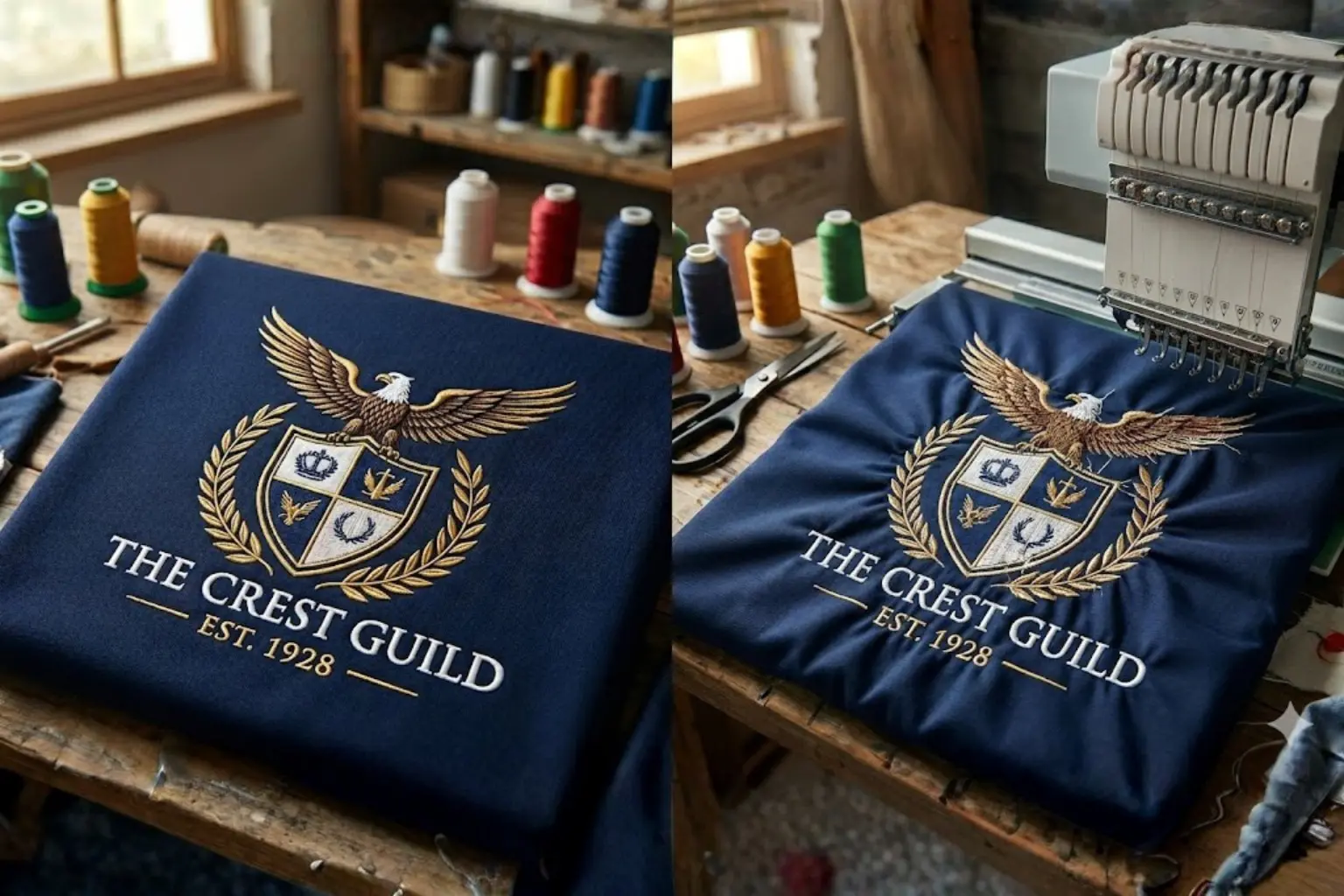
Walk into any corporate office, trade show, sports event, or retail store, and you’ll see embroidered logos everywhere. From employee uniforms and promotional hats to luxury apparel and branded merchandise, embroidery remains one of the most respected decoration methods in the apparel industry.
Yet not all embroidered logos create the same impression.
Some logos immediately communicate professionalism, attention to detail, and brand excellence. The stitches are clean, the lettering is sharp, and the overall design appears polished and expensive. Others look bulky, distorted, uneven, or difficult to read. Even when the same logo is used, the difference can be dramatic.
This often leaves business owners wondering:
- Why does one embroidered logo look premium while another looks cheap?
- Is it the embroidery machine?
- Is it the thread quality?
- Is it the garment itself?
- Or is there something happening before the embroidery process even begins?
The answer lies in one crucial step that many people overlook: embroidery digitizing.
Digitizing is the foundation upon which every embroidered logo is built. No matter how advanced the embroidery machine may be, it can only follow the instructions provided by the digitized file. If those instructions are poorly created, the final embroidery will suffer. If they are expertly crafted, the result can look exceptional.
In this guide, we’ll explore exactly why digitizing is the biggest factor separating premium embroidery from cheap-looking embroidery and how professional digitizing can elevate the appearance of your brand.
Understanding the True Purpose of Embroidery Digitizing
Many people mistakenly believe embroidery digitizing is simply converting an image into an embroidery file.
In reality, professional digitizing is much more complex.
A digitizer acts as both an engineer and an artist. Their job is to analyze a logo and determine how every part of the design should be stitched to achieve the best possible result on fabric.
The digitizer must decide:
- Which stitch types to use
- Stitch direction for each element
- Underlay structure
- Stitch density
- Pull compensation
- Push compensation
- Start and stop points
- Thread trims
- Layer sequencing
- Fabric-specific adjustments
Every decision affects the final appearance of the embroidery.
A logo that looks perfect on a computer screen can become distorted when stitched unless these factors are carefully considered.
This is why professional digitizing requires experience, technical knowledge, and attention to detail.
Why Embroidery Has Different Rules Than Graphic Design
One of the biggest reasons logos can look cheap when embroidered is that embroidery follows different rules than graphic design.
Digital artwork is made of pixels and vectors.
Embroidery is made of thread.
Thread has physical limitations:
- It has thickness.
- It creates tension.
- It interacts with fabric.
- It reflects light differently.
- It cannot reproduce tiny details exactly as they appear on a screen.
A skilled digitizer understands these limitations and adapts the artwork accordingly.
For example, a logo with extremely thin lines may need adjustments before embroidery. Small text may need resizing or restructuring. Tiny gaps may need to be widened to remain visible after stitching.
Without these modifications, the final embroidery can lose clarity and detail.
The Psychology of Premium Embroidery
Premium embroidery doesn’t just look better—it influences how people perceive your brand.
Research consistently shows that consumers associate quality presentation with business credibility.
When customers see a professionally embroidered logo, they often subconsciously assume:
- The company pays attention to details.
- The company invests in quality.
- The company is established and trustworthy.
- The company takes pride in its appearance.
On the other hand, poorly embroidered logos can create negative impressions.
Common perceptions include:
- Low-quality products
- Lack of professionalism
- Inconsistent branding
- Cost-cutting measures
This makes embroidery digitizing more than a technical service. It becomes an important component of brand presentation and marketing.
Characteristics That Make an Embroidered Logo Look Expensive
Crisp Edge Definition
Premium embroidery always features clean, controlled edges.
Shapes appear intentional and well-defined.
This is achieved through:
- Proper underlay
- Correct compensation settings
- Appropriate stitch angles
- Balanced densities
Without these adjustments, edges become rough and uneven.
The human eye naturally notices irregular shapes, making poor embroidery immediately appear less professional.
Perfectly Balanced Density
Density is one of the most misunderstood aspects of embroidery.
Many beginners assume that adding more stitches automatically improves quality.
In reality, excessive density often creates the opposite effect.
Overly dense embroidery can cause:
- Fabric puckering
- Thread breaks
- Needle breaks
- Stiff logos
- Distorted shapes
Premium embroidery uses the minimum density necessary to achieve complete coverage while maintaining flexibility and clean detail.
Experienced digitizers know exactly how much density is needed for different fabrics and design elements.
Smooth Satin Stitches
Satin stitches are commonly used for text, borders, and narrow design elements.
When digitized correctly, satin stitches produce:
- Smooth surfaces
- Rich thread shine
- Elegant appearance
- Professional finish
Poor digitizing often results in:
- Jagged borders
- Split columns
- Uneven widths
- Visible gaps
These flaws immediately reduce perceived quality.
Consistent Stitch Flow
One hallmark of premium embroidery is natural stitch flow.
The stitching appears organized and intentional.
This is achieved through strategic stitch direction choices.
Good stitch direction:
- Enhances texture
- Improves readability
- Creates visual depth
- Highlights design elements
Random stitch directions often make logos appear cluttered and cheap.
The Hidden Science Behind Great Digitizing
Professional embroidery digitizing involves understanding how thread behaves under real-world conditions.
Every stitch creates tension.
Every fabric reacts differently.
Every embroidery machine introduces slight variations.
An experienced digitizer compensates for these variables before production even begins.
This includes understanding:
Pull Effect
Stitches naturally pull fabric inward.
Without compensation, circles become ovals and shapes become distorted.
Push Effect
As stitches accumulate, designs may expand outward.
Professional digitizers anticipate this movement.
Fabric Stretch
Performance wear stretches differently than twill jackets.
Caps behave differently than polo shirts.
Towels behave differently than backpacks.
Digitizing must account for these differences.
Why Small Text Separates Professionals From Amateurs
Small lettering is often where poor digitizing becomes obvious.
Many logos contain:
- Slogans
- Website URLs
- Taglines
- Department names
Cheap digitizing frequently causes text to become unreadable.
Letters close up.
Counters disappear.
Characters merge together.
Professional digitizers know how to maintain readability by adjusting:
- Letter spacing
- Column width
- Stitch density
- Stitch type
As a result, text remains crisp even at smaller sizes.
The Role of Underlay in Premium Embroidery
Underlay is one of the most important yet least visible aspects of embroidery.
Think of underlay as the foundation beneath a building.
Without a strong foundation, everything above it suffers.
Underlay helps:
- Stabilize fabric
- Improve stitch quality
- Prevent sinking
- Increase durability
- Enhance edge definition
Poor underlay often causes embroidery to appear uneven and inconsistent.
Professional digitizers carefully select underlay types based on the logo and fabric being used.
Why Auto-Digitizing Often Produces Cheap Results
Modern software can automatically convert artwork into stitches.
While this sounds convenient, it rarely produces premium results.
Auto-digitizing software cannot truly understand:
- Brand priorities
- Fabric behavior
- Stitch interaction
- Design hierarchy
- Production requirements
Instead, it relies on algorithms and assumptions.
The result is often:
- Excessive stitch counts
- Poor sequencing
- Unbalanced densities
- Weak readability
- Reduced visual appeal
This is why experienced embroidery shops still rely heavily on manual digitizing.
Human expertise consistently outperforms automated conversion tools.
How Fabric Choice Influences Embroidery Quality
Even a perfectly digitized file must be optimized for the fabric it will be embroidered on.
Polo Shirts
Require stabilization against stretching.
Caps
Need specialized cap digitizing techniques.
Hoodies
Require adjustments for thicker materials.
Towels
Need elevated stitches to prevent detail loss.
Performance Fabrics
Need lighter densities and advanced compensation.
A generic file used across all garments often produces inconsistent results.
Professional digitizers customize files for specific applications whenever possible.
The Cost of Poor Digitizing for Businesses
Many companies focus solely on finding the cheapest digitizing service available.
Unfortunately, poor digitizing often becomes far more expensive in the long run.
Common consequences include:
- Garment waste
- Production delays
- Customer complaints
- Rejected orders
- Re-digitizing fees
- Brand image damage
A poorly digitized logo may need multiple revisions before becoming production-ready.
By contrast, professionally digitized files save time, reduce errors, and deliver consistent quality from the start.
How Professional Digitizing Improves Brand Consistency
Brand consistency is essential for growing businesses.
Your logo should look equally professional on:
- Uniforms
- Hats
- Jackets
- Bags
- Promotional items
Expert digitizing ensures consistency across all applications.
Customers recognize your brand instantly because every embroidered version maintains the same quality and visual integrity.
What to Look for in a Professional Digitizing Service
When selecting a digitizing provider, consider:
Experience
Look for proven expertise across multiple embroidery applications.
Portfolio Quality
Review actual embroidery samples, not just digital previews.
Manual Digitizing
Ensure files are manually digitized rather than automatically generated.
Fabric Knowledge
The provider should understand different garment types.
Revision Support
Reliable digitizers offer revisions when needed.
Fast Turnaround
Quality and speed should work together.
Conclusion
The difference between a premium embroidered logo and a cheap-looking one is rarely accidental.
It is the result of hundreds of technical decisions made during the digitizing process.
From stitch direction and density to underlay, compensation, sequencing, and fabric optimization, every element contributes to the final appearance of the embroidery.
A professionally digitized logo looks sharper, lasts longer, stitches more efficiently, and represents your brand more effectively.
In today’s competitive market, businesses cannot afford to overlook the importance of embroidery digitizing. Whether you’re producing uniforms, promotional products, corporate apparel, or retail merchandise, the quality of your digitizing will directly impact the quality of your embroidery.
Ready to Transform Your Logo Into Premium Embroidery?
At Digitizing Logo, we specialize in professional embroidery digitizing services designed to deliver clean, sharp, and production-ready results. Our expert digitizers manually create every file to ensure maximum stitch quality, accuracy, and efficiency across all garment types.
Whether you need digitizing for caps, polos, jackets, patches, 3D puff embroidery, or complex corporate logos, our team is ready to help.
Why Choose Digitizing Logo?
✔ Professional Manual Digitizing
✔ Fast Turnaround Times
✔ High-Quality Stitch Files
✔ Fabric-Specific Optimization
✔ Unlimited Quality Checks
✔ Competitive Pricing
✔ Support for All Major Embroidery Machine Formats
Don’t let poor digitizing make your brand look cheap.
Get your logo digitized by the experts at Digitizing Logo and experience the difference professional digitizing can make. Contact us today for a free quote and take the first step toward premium-quality embroidery.